
From Shaking Knees to Strong Voice: How I Learned to Speak with Confidence
When I was in middle school, every student had to write, memorize, and deliver a five-minute presentation about our favorite company. I loved the writing part. I finished early, polished every sentence, and memorized every line. I thought I was completely prepared.
Then I practiced it out loud with my mom.
Within seconds, my legs started shaking and my palms were sweaty. My voice quivered in a way it never did when I was alone. I felt exposed and uncomfortable. Suddenly the words I knew perfectly on paper felt heavy and unfamiliar when I had to say them out loud.
More Common Than You Think
It did not occur to me then that what I was feeling was extremely common. Public speaking anxiety is something most people experience. Around 75 percent of people report some level of fear or nervousness when they have to speak in front of an audience, and it is one of the most common social anxieties in the world. Only a small percentage of people genuinely enjoy public speaking without any nerves at all, and some experience intense fear that makes them avoid speaking situations entirely.
Learning to Work With the Nerves
The first thing that helped me was acknowledging what I was feeling instead of pretending it wasn’t happening. Admitting that I was nervous took away some of the power the feeling had over me. That self-awareness let me start practicing real techniques for managing my nerves.
One of the most effective tips I learned was to slow down and breathe. Before you even speak a word, taking a few slow breaths helps calm your nervous system and gives you a moment to focus your attention where you want it. When you practice out loud, try breathing in for a count of four and exhaling for a count of six. It might feel silly at first, but it helps steady your voice when you are standing in front of others.
Another thing that made a big difference for me was practicing pausing instead of filling every moment with rushed words. A pause gives your audience time to absorb what you are saying and gives you a moment to reset your thoughts. When I focused on pacing myself and using pauses intentionally, my delivery felt more confident and natural, even when I was nervous.
Small Speaking Tips That Changed Everything
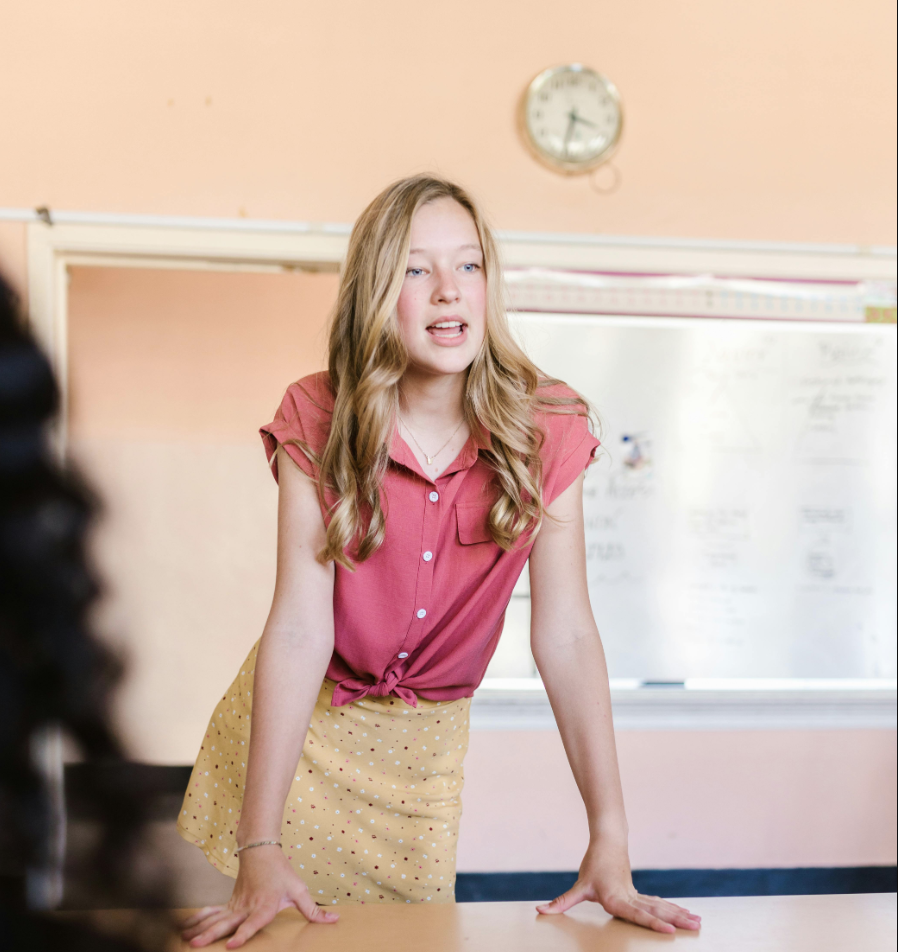
Eye contact was another challenge. At first I found myself staring at the floor or at a fixed point because it felt safe. But I learned that scanning the room slowly and making gentle eye contact with different people actually made my voice feel stronger, and it helped me feel more connected to the audience instead of afraid of them.
Posture also mattered more than I expected. Standing with my feet planted and shoulders relaxed helped my voice project more steadily, and it made me feel more in control of my body instead of controlled by anxiety.
Round Two: Bigger Stage, Same Fear
I delivered that speech in class and ended up winning the competition. I felt relieved and proud, but then I was told since I presented so well, I would be giving the same speech again in front of the entire school. The fear came rushing back.
I thought I had already conquered it. My mom reminded me that confidence does not appear after doing something just once. It grows each time you face a similar challenge. So I practiced again with all the same techniques: breathing, pausing, steady eye contact, and confident posture. When I stepped onto that stage in front of 200 people, I was still nervous, but I knew what to do. My voice was steady and strong, my palms were dry, and I moved around the stage with confidence I did not have before.
Public Speaking Is a Skill, Not a Talent
That experience changed how I think about public speaking. It is not about being naturally bold or fearless. It is about preparing, practicing, and learning how to manage your reactions so that your message can shine. If your legs shake before a presentation or your voice feels shaky, that does not mean you are bad at speaking. It means you are human, and you are learning.
Public speaking is a skill that gets stronger the more you use it. So if you feel nervous at first, remember that those nerves do not define your ability. Try practicing breathing exercises, slow pacing, intentional eye contact, and strong posture. Speak in front of a mirror, record yourself, rehearse in front of friends or family, and give yourself permission to improve with repetition.
The only way to find your voice is to use it!
Check out our other blog posts for more helpful tips, or visit our courses page to get more public speaking prep!
Check out our other blog posts for more helpful tips, or visit our courses page to get more public speaking prep!

Copyright © 2025